SparkLab
How to bring an entrepreneurship program to your Michigan high school
A practical guide for school administrators, CTE coordinators, and teachers who want to add hands-on entrepreneurship to their school's offering.
- schools
- michigan
- guide
If you're a Michigan high school administrator or teacher who has decided your students would benefit from a real entrepreneurship program, the next question is logistics: how do you actually get one running?
This is a short, practical playbook based on what we've seen work — and what we've watched stall — across our partner schools in Oakland County and the broader Detroit metro.
Step 1: Pick the slot before you pick the program
The single biggest predictor of whether an entrepreneurship program survives its first year is whether it has a dedicated time slot. Programs that try to live "in addition to" everything else die quickly. Programs that fit into an existing class period thrive.
Common slots that work well in Michigan high schools:
- CTE business courses — perfect fit; SparkLab's curriculum maps directly.
- Economics or personal finance — same audience, complementary content.
- A senior elective — often the easiest political path with the most flexible scheduling.
- An "innovation block" if your school runs one.
Pick the slot first. Then evaluate which program fits the slot.
Step 2: Get one teacher actively excited
A district mandate without a teacher champion goes nowhere. A teacher champion without district support goes further than you'd expect.
The right teacher does not need to have entrepreneurial experience. They need to be:
- Comfortable being a facilitator, not a sage.
- Willing to bring in outside mentors as the primary "experts".
- Excited about students building messy, real, imperfect things in front of them.
If you have that person, you have a program.
Step 3: Decide what "real" means
Some "entrepreneurship" programs are entirely simulated. Students write business plans for a fictional business and present to their teacher. Others — like SparkLab — push students to identify real problems, validate them with real people, and present to real working entrepreneurs.
The simulated path is easier to run. The real path produces dramatically better outcomes — and dramatically better portfolio pieces for college applications.
Pick on purpose.
Step 4: Lock in a culminating event
Programs that end with a real pitch event get taken seriously by students from week 1. Programs that end with a paper submitted to the teacher get taken seriously by no one.
The pitch event doesn't have to be elaborate. It can be:
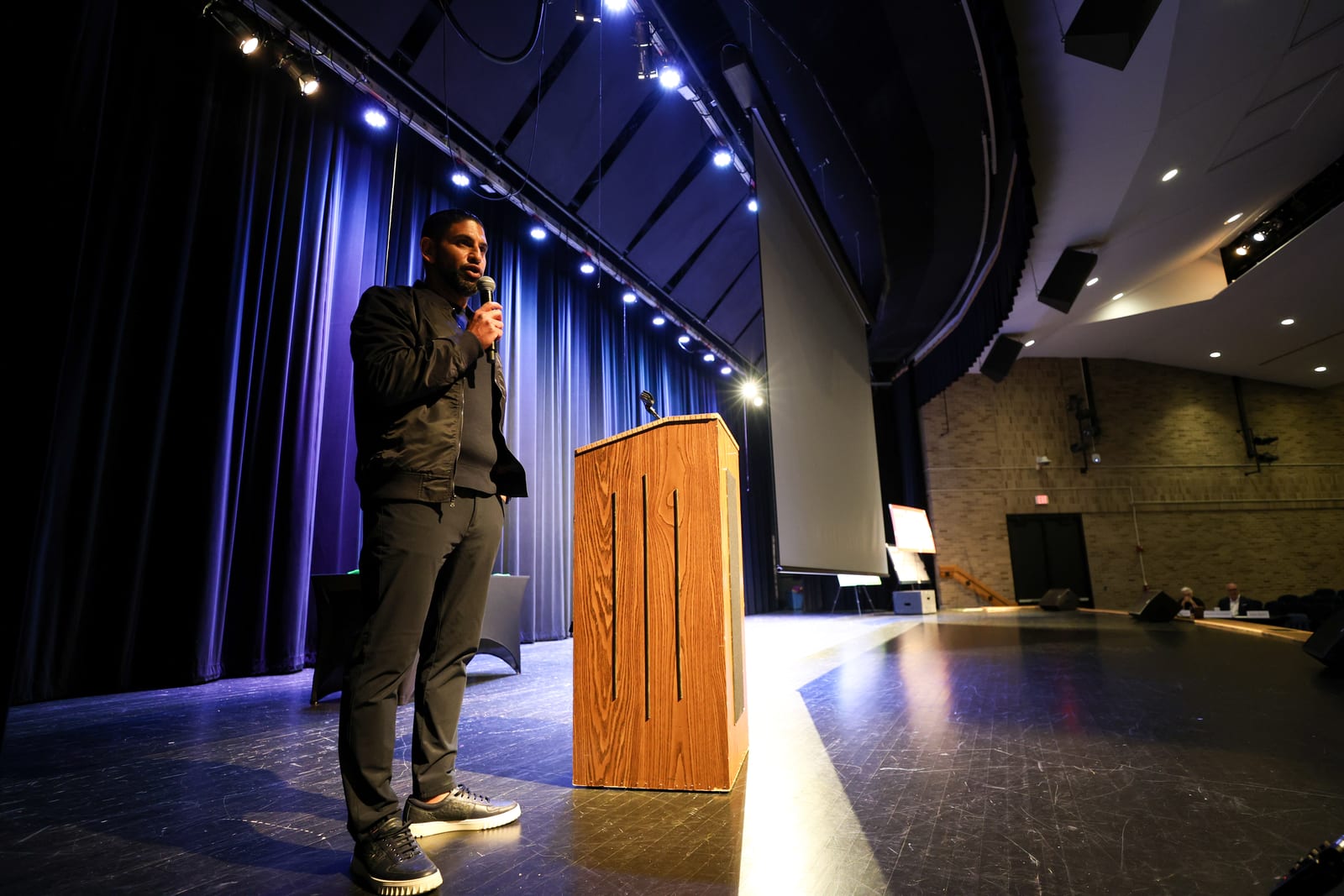
- A panel of 3-5 local entrepreneurs evaluating teams in the school auditorium.
- A regional pitch competition with multiple schools competing for cash prizes (this is what SparkLab does).
- An evening showcase open to parents, community members, and local press.
What matters: it has to feel real, it has to be on the calendar from day 1, and there have to be consequences (good ones — recognition, prizes, exposure).
Step 5: Talk to a few schools who already do it
Don't reinvent the playbook. Reach out to nearby Michigan districts that already run an entrepreneurship program and ask what they wish they'd known.
If you're in Birmingham, Troy, Royal Oak, Bloomfield Hills, Rochester, or anywhere else in Oakland or Wayne County, SparkLab is one option — and we're happy to talk through the logistics with you whether you ultimately partner with us or not.
A simple timeline
If you start the conversation today, here's a realistic timeline:
- Now: Identify the slot and teacher champion.
- +30 days: Evaluate 2-3 program options. Brief your principal and (if needed) district CTE coordinator.
- +60 days: Lock in the partner, dates, and venue for the pitch event.
- +90 days: Program starts.
- +5 months: First pitch competition.
That's one full school semester from "we should do this" to students standing on stage pitching real businesses.
See how a SparkLab partnership works or reach out directly — we typically respond within two business days.